Discovering the Diverse Applications and Advantages of Aluminum Foundry in Modern Production
Aluminum shops are important in today's manufacturing landscape. They produce components that serve different markets, including automobile and aerospace. The light-weight nature of Aluminum integrated with its durability makes it a recommended selection. In addition, ingenious spreading methods enhance manufacturing effectiveness. Nonetheless, the ramifications of these developments on sustainability and future trends necessitate additional expedition. What chances and challenges exist ahead for Aluminum shops in this progressing market?
The Role of Aluminum Foundries in Modern Production
Aluminum factories play a vital role in contemporary manufacturing, adding considerably to different markets such as automotive, aerospace, and building and construction. These centers concentrate on the melting and casting of light weight aluminum, a lightweight, durable product understood for its excellent deterioration resistance and thermal conductivity. The factories utilize sophisticated strategies, including sand spreading, die casting, and financial investment spreading, to produce high-grade components customized to certain applications.
Key Applications of Aluminum Elements Across Industries
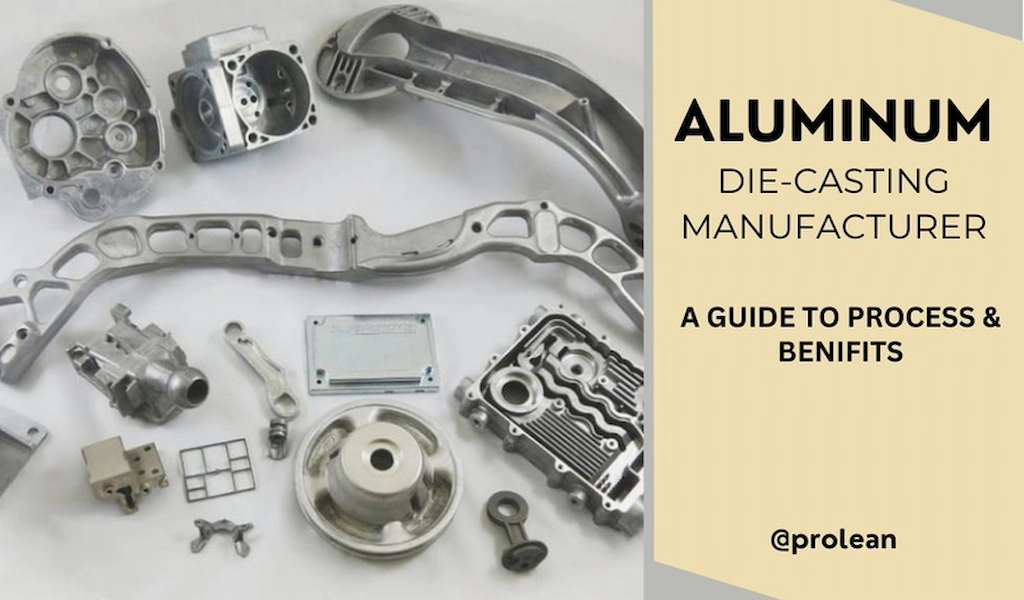
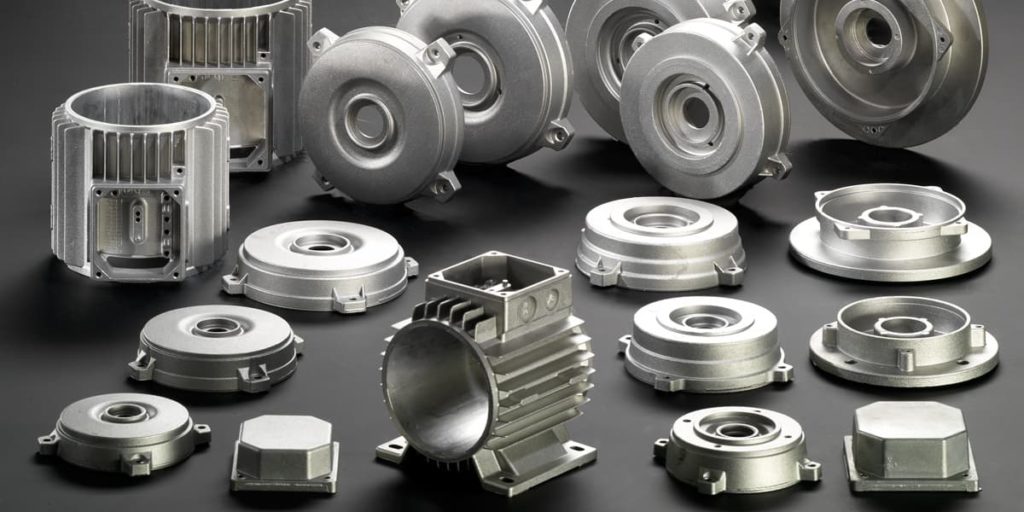
Across numerous markets, Aluminum components are essential to boosting efficiency and performance. In the vehicle field, Aluminum is widely utilized for engine blocks, transmission instances, and structural elements, adding to lighter vehicles that improve fuel effectiveness. The aerospace sector relies upon Aluminum for aircraft frameworks, elements, and wings, capitalizing on its high strength-to-weight ratio to improve trip efficiency.
In electronic devices, Aluminum is made use of in heat sinks and cases, providing reliable thermal administration while keeping lightweight qualities (Aluminum Castings). The construction industry benefits from Aluminum in window frames, roofing, and cladding, where durability and appearances are important
Additionally, packaging applications utilize Aluminum for foils and containers, supplying a reliable obstacle versus wetness and light. In each of these industries, Aluminum components not only sustain practical demands however additionally promote sustainability through recyclability, making them a preferred selection in modern-day production techniques.
Advantages of Aluminum Compared to Various Other Products
The flexibility of Aluminum makes it a premium option over many various other materials in manufacturing applications. Among its main advantages is its light-weight nature, which adds to lowered power intake and boosted effectiveness in transport and building sectors. In addition, Aluminum exhibits superb corrosion resistance, improving the durability of items without the requirement for considerable maintenance.
Light weight aluminum's malleability permits for intricate layouts and shapes, catering to varied sector needs, from auto to aerospace. Its electric and thermal conductivity additionally surpasses that of many alternatives, making it excellent for applications requiring warm dissipation or electric transmission.
Furthermore, Aluminum is very recyclable, promoting sustainability in making procedures. Contrasted to steel, it offers a positive strength-to-weight ratio, enabling durable yet light-weight frameworks. Jointly, these features position Aluminum as a preferred material, allowing suppliers to accomplish both efficiency and sustainability in their items.
Cutting-edge Casting Techniques in Aluminum Foundries
In the domain of Aluminum manufacturing, innovative spreading techniques are transforming the manufacturing procedure and boosting the product's applications. Amongst these techniques, die casting attracts attention for its ability to create complicated shapes with high accuracy and minimal waste. This approach permits quick automation, making it excellent for industries such as vehicle and electronic devices. In a similar way, financial investment casting has gained popularity as a result of its capacity to produce complex styles with excellent surface area finish, accommodating both large and small components.
Another notable strategy is sand spreading, which provides versatility and cost-effectiveness for generating majorities. Recent improvements in 3D printing innovations are also being incorporated into Aluminum spreading, enabling quick prototyping and personalization. These innovations not just improve performance but additionally expand the opportunities for Aluminum applications throughout different industries, ultimately driving the development of modern production practices.
Sustainability Efforts in Aluminum Manufacturing
Sustainability efforts in Aluminum production concentrate on enhancing recycling procedures, which significantly decrease energy usage and emissions. Executing power performance methods further adds to a reduced carbon impact, making Aluminum an extra environmentally friendly product. These initiatives mirror the industry's commitment to lasting manufacturing and source preservation.
Reusing Aluminum Advantages
While Aluminum manufacturing is resource-intensive, recycling Aluminum presents considerable benefits that align with sustainability campaigns in production. Recycling Aluminum calls for only 5% of the power needed for primary production, significantly reducing greenhouse gas discharges. This power efficiency not only saves natural deposits yet also reduces the ecological impact connected with mining and refining basic materials. Additionally, recycling Aluminum supports a circular economic climate by reintroducing materials back into the supply chain, thereby minimizing waste and promoting resource conservation. The procedure also produces economic benefits through work production in recycling centers and minimizes dependence on international Aluminum sources. Generally, reusing Aluminum is an essential element of lasting practices that contribute to a more ecologically responsible production landscape.
Energy Performance Practices
The Aluminum production field is significantly adopting energy efficiency practices to boost sustainability together with recycling efforts. These initiatives focus on optimizing power consumption throughout the production procedure. Suppliers are implementing advanced click reference technologies such as high-efficiency heaters and wise grid systems, which enable better power monitoring and lowered waste. Furthermore, the integration of eco-friendly power sources, like solar and wind power, is coming to be much more prevalent, in addition lowering dependence on fossil fuels. Continuous surveillance and evaluation of energy use assist in the identification of inadequacies and opportunities for renovation. On top of that, labor force training on energy-saving techniques warranties that workers proactively contribute to energy preservation initiatives, producing a society of sustainability within the organization. These methods jointly support an even more lasting Aluminum manufacturing landscape.
Minimized Carbon Footprint
To attain a reduced carbon impact, the Aluminum manufacturing industry is visit this site increasingly embracing ingenious sustainability efforts. Business are spending in sophisticated technologies that lessen energy intake and emissions throughout the production process. The combination of renewable resource sources, such as solar and wind power, plays a crucial role in reducing dependence on nonrenewable fuel sources. Furthermore, the recycling of Aluminum scrap considerably reduces the carbon footprint, as recycled Aluminum requires only a portion of the power required for primary production. Joint efforts amongst suppliers, governments, and ecological companies better drive progress in sustainability. By taking on these steps, the Aluminum sector not just addresses environmental concerns but additionally improves its one-upmanship in a market increasingly concentrated on environment-friendly techniques.
Future Fads in Aluminum Foundry Technology
Advancement goes to the center of Aluminum Foundry technology, driving considerable developments and reshaping industry practices. Emerging trends include the integration of expert system and artificial intelligence, enhancing procedure optimization and quality assurance. These innovations assist in predictive upkeep, minimizing downtime and enhancing operational performance. Furthermore, using 3D printing and additive manufacturing is obtaining grip, permitting for complicated geometries and decreased material waste.
Sustainability stays an important focus, with developments in reusing methods improving the circular economy of aluminum. Companies are increasingly taking on energy-efficient approaches, such as low-pressure die casting, which minimize power intake and discharges. Furthermore, digital twins are becoming commonplace, making it possible for real-time surveillance and simulation of Foundry procedures.
Frequently Asked Inquiries
What Security Procedures Remain In Location at Aluminum Foundries?
Aluminum shops implement various precaution, consisting of protective equipment, proper air flow, fire avoidance systems, normal safety training, and emergency procedures to alleviate threats associated with heats, molten metal handling, and prospective exposure to dangerous materials.
How Do Aluminum Foundries Guarantee Top Quality Control Throughout Manufacturing?
Aluminum factories execute stringent quality control steps such as routine examinations, material testing, and adherence to industry standards. These procedures ensure consistency in products while decreasing issues, eventually enhancing visite site the reliability and efficiency of Aluminum parts.
What Are the Usual Obstacles Dealt With by Aluminum Foundries?
Aluminum factories commonly encounter difficulties such as maintaining consistent top quality, handling production prices, steering governing compliance, attending to devices upkeep problems, and adjusting to rising and fall market demands, every one of which can influence operational effectiveness and success. - Metal Castings
Just how Does the Aluminum Recycling Refine Operate In Foundries?
The Aluminum recycling procedure in foundries includes collecting scrap light weight aluminum, melting it in heating systems, removing pollutants, and casting the liquified metal into preferred shapes, therefore reestablishing it into the manufacturing cycle effectively and sustainably.
What Are the Work Opportunities Available in Aluminum Foundries?
Work chances in Aluminum foundries consist of functions such as Foundry operators, high quality control inspectors, upkeep service technicians, designers, and manufacturing supervisors. These settings call for different ability levels, supplying potential for profession improvement within the production sector.
Sustainability efforts in Aluminum manufacturing focus on improving recycling procedures, which substantially minimize power intake and discharges. While Aluminum production is resource-intensive, recycling Aluminum presents considerable advantages that align with sustainability campaigns in manufacturing. Recycling Aluminum requires only 5% of the energy needed for primary production, considerably minimizing greenhouse gas exhausts. The Aluminum production field is progressively embracing energy efficiency techniques to boost sustainability together with recycling efforts. In addition, the recycling of Aluminum scrap substantially reduces the carbon footprint, as recycled Aluminum requires only a portion of the power needed for main production.
Comments on “The role of Wisconsin Aluminum Foundry in eco-friendly practices”